| |||
Moving Pets by Car
Moving Fish
Creating A Pet Pack
If you're moving your pet by car, there are several things you should plan on taking with you on moving day:
Pet Transport
Depending on the temperament and size of your pet, as well as the distance you're moving,
it may be make sense to enlist the help of a pet transporter. Reputable pet transporters can
organize every aspect of moving your pet from beginning to end. Services provided may include the following:
If you will be transporting your dog or cat by air, you must have the following details in order:
Visit us at www.sunshinemovingcompany.com |
Wednesday, March 13, 2013
Tips for moving with pets
Monday, March 11, 2013
Tips for packing your bathroom
When it comes to packing this means that you should take a good look at every room – what’s to move and what’s not. Although packing your bathroom may sound like a simple task, there are a few specifics that you should pay attention to. First of all, if you go to your bathroom and take everything out you are very likely to notice that you have been keeping a lot of things you don’t use anymore. And surely a lot of expired items. Packing up this part of your home means getting rid of these things. So, take a look at these tips below on how to pack the items in your bathroom.
Packing your Bathroom when Moving
- In order to establish what to take first check everything in your bathroom. Look at the cupboards, shelves and drawers. Are there any worn out items or empty bottles? You can just throw these away along with any package that is broken or leaking.
- When it comes to medicines that have expired and chemicals do not take them to the garbage. They may be dangerous and contain substances that are not safe for the environment. Instead you better take them to the pharmacy where they will be disposed of without any risks. Be especially careful with medicines. If you see a bottle without its label or if it has changed its smell and consistency do not use it. Pack the medicines separately from the toiletries.
- If you have electronics inside your bathroom also pack it separately.
- If there are some medicines in your bathroom that you are using do not pack them – take them with you.
- All the items in your bathroom that are dirty and contain bacteria should go away, too. Use the opportunity that you are moving to clean up your bathroom. You can wash the rugs that are inside and take them clean to your new house or just give it to the dry cleaners.
- Before placing anything inside the boxes close tight all bottles and put away the ones that contain lotion, perfume, creme or make up. Anything can be spilled or possible to leak should be packed first in plastic bags that are sealable and use tape to fix it well. These along with all the towels and curtains should be dry before being placed inside the box. Since cardboard is very susceptible to moisture anything wet inside can make it break.
- Separate chemicals and cleaning detergents. Place them also in a plastic bag and tie it up well to prevent any children from opening it. You can also use tape to ensure the safety of the packing.
The best way to pack your bathroom is to make sure that everything going into the boxes is dry - towels, shower curtains, bottles, etc.
- When packing the stuff from your bathroom separate plastic and metal things and the soft, unbreakable things on one side. They will go together in the boxes. Estimate how many boxes you will need and distribute the heaviest items equally. That way your boxes won’t weight too much and will be easier to carry. You can use this way of packing for any item in any room of your house. But for the bathroom – because of its specific content – it is best.
- Separate one or two boxes in which you will place breakable items like glass bottles. Wrap each of them with bubble wrap before arranging it in. This is necessary because you don’t want any of your items to get smashed or broken.
- When arriving at your new home clean your bathroom. This includes floor, walls, windows, toilet and sink, shelves, bathtub or shower cabin and the ceiling as well – a complete cleaning. In the meantime also take all the appliances out so they don’t get wet. Once the area is clean and disinfected you can take in the appliances and the boxes and start unpacking.
Visit our website at www.sunshinemovingcompany.com
Sunday, March 10, 2013
Choosing The Right Rental Truck Size
Choosing your truck size:
The size of the vehicle depends on the amount of items that you have in your home. And while there are some companies that would assist you in choosing the right size truck, other won't do it. So what do you do? You want to be careful not to pick a truck size that is too small so that you items don't fit. You also don't want to pick a truck that is too big as you items will be sliding around and may become damaged. We have devised a way for you to get the truck size you need based on the items you have in your home.
Remember the golden rule, if you're ever unsure you should always defer to a larger truck size. This is especially true if you are relocating long distance and multiple trips is not an option.
Rental Trucks for Small Moves
- Small rental trucks should be used primarily for local moves. Only consider renting a 10'-12' truck if you have a studio or small one bedroom apartment with minimal furniture.
- Most small moving trucks have rear wheel wells that stick out and reduce the amount of flat cargo space.
- You will likely find that a larger truck (see medium sizes below) costs the same or sometimes less than a small truck. This is because most companies don't have an extensive inventory of small trucks whereas they usually have a large inventory of medium trucks.
- Fuel economy for small rental trucks tends to be 9-14 MPG.
RENTAL COMPANY TRUCK SIZE SIZE of home
U-Haul 10' Studio (Very Small)
Budget Truck 10' Studio(Very Small)
Penske Truck 12' Studio (Small)
Rental Trucks for Apartments and Small Homes
- Moving trucks between 14'-17' are the most common sizes rented. They tend to be the most inexpensive trucks because of the quantity available.
- Medium truck sizes are best used for 1-2 bedroom apartments as well as small homes. We typically don't recommend this size to anyone with more than 1200sqft of living space.
- Fuel economy for medium rental trucks tends to be 8-11 MPG.
RENTAL COMPANY TRUCK SIZE SIZE of home
U-Haul 14' 1 Bedroom (Small)
Budget Truck 16' 2 Bedrooms (Medium)
Penske Truck 16' 2 Bedrooms (Medium)
U-Haul 17' 2 Bedrooms (Medium)
Rental Trucks for Single Family and Town Homes
- With the exception of the 20' U-Haul, all of the trucks in this size range require diesel fuel. Remember to factor the cost difference of diesel fuel into your overall moving budget.
- Larger rental trucks are best utilized for single family and town homes. If you have any doubt about whether or not your household goods can fit into a medium truck size you should always defer to this range.
- Fuel economy for large rental trucks tends to be 4.5-6.5 MPG.
RENTAL COMPANY TRUCK SIZE SIZE of Home
U-Haul 20' 1 to 3 Bedrooms (Large)
Penske Truck 22' 1 to 3 Bedrooms (Large)
Budget Truck 24' 3 to 4 Bedrooms (Large)
U-Haul 26' 4+ Bedrooms (Large)
Penske Truck 26' 4 + Bedrooms (Large)
Still Not Sure?
We know choosing your rental truck size can be difficult, especially if your moving long distance. We leave you with some final tips and advice not otherwise covered in this blog:
- If your moving locally this should be a no-brainer. Truck rentals used for local moves are billable at a per day and mileage rate, the daily price may vary by $10-$20 depending on the size. In other words, spend the extra few bucks and get the larger truck just to be sure.
- If you plan to pack and load your moving truck by yourself or with help from your friends you should defer to a larger truck size. Professional movers are trained to maximize the overall space, whereas those not professionally trained may not be able to achieve the same level of efficiency. If you are concerned about space consumption consider hiring moving labor to properly load your truck.
Need assistance with Loading or Unloading your rental truck?
Visit us at www.sunshinemovingcompany.com or call our office at 407-862-2217
Tips For Packing Your Electronics
Tips for Packing Your Electronics
Packing electronic items can be very much
challenging. Extra care should be taken while packing the electronic items.
Since, these items are fragile and expensive, they need to be packed and
handled carefully to minimize the risk of damage.
You
should pack each electronic item in a box that is only slightly larger than the
size of items itself. The more strongly fitting a box is, the more protected
your electronic item will be.
Basic Requirements
· User manual or guide.
· Original packaging box.
· Antistatic bubble wrap,
peanuts.
· Small color-coded labels.
· Sealable bags.
· Markers, packing tapes.
Just read on the following tips to secure
your electronic items while packing and transporting –
· Computers
oBackup all of your
important data on a DVD, CD or Portable device.
oRefer to the user guide or
manufacturing guide for disassembling instructions.
oBefore disconnecting any
plugs or wires, mark the wire and the port you're removing it from, with the
colored labels. Color aids in coding the cables and ports so that you can
reconnect them later.
oOnce you have the wires
disconnected, use twist ties to secure the wires, so they do not disentangle.
Place the wires into a sealable bag and secure them with tape.
oIf you have the original
packaging, including box, use that to pack the equipment. If you don't, acquire
electronic specialty boxes directly from the manufacturer or from a moving
company.
oRemove or disassemble all
parts from the computer that can be disconnected.
oUse antistatic bubble wrap
to cover each part one by one and secure ends with tape. Use a thick layer of
bubble wrap to line the bottom of the box.
oPlace the largest piece of
equipment on the bottom and smaller protected items on top of the box. Fill
empty spaces and holes with antistatic packing materials like peanuts,
inflatable bags, etc.
oAfter packing, seal the box
with packing tape and mark it as “Fragile” and also indicate which end is up.
· Printers, Fax Machines and
Copiers
oWhen packing printers
(laser or ink jet), fax machines, and copiers, remove the toner or ink
cartridges. For other types of printers, the printer head should be removed.
oAfter removing, place
cartridges or head in a plastic bag and secure it with sealing tape.
oUse the original box for
packing, or purchase a specialty box.
· Refrigerators
oRemove all contents,
including freezer items.
oAfter removing, unplug the
refrigerator and let the freezer defrost.
oWith a strong rope or cord,
tie the doors of refrigerator by wrapping it around the fridge.
oIf you are unsure about
moving it, hire professional movers. Since refrigerators are awkward and heavy,
moving them incorrectly can cause permanent damage.
· Televisions
oFirst of all, make sure
that all outside antennas have been disconnected.
oRefer to the user manual or
guide to protect your TV in the best possible way.
oWrap the TV with padding or
blanket carefully.
oIf you have the original
packaging, including box, use that to pack the equipment.
oKeep the box in its upright
position as you lift it, and also keep sharp objects away from the screen.
· Other Electronic Items
oRemove all parts from the
electronic items that can be disconnected.
oWrap each part separately
by using antistatic bubble wrap and secure ends with packing tape.
oIf you think that you will
have trouble reconnecting the items, take a picture of the configuration. Use
the picture as a reference while reconnecting all of the wires for your
electronic items.
oPlace the wires into a
sealable bag and tape it to the piece of equipment.
oPlace the item in the box
and fill the empty space with antistatic packing materials. Whenever possible,
pack electronics in their original box.
oSeal the box with packing
tape.
Visit our website at www.sunshinemovingcompany.com
Saturday, March 9, 2013
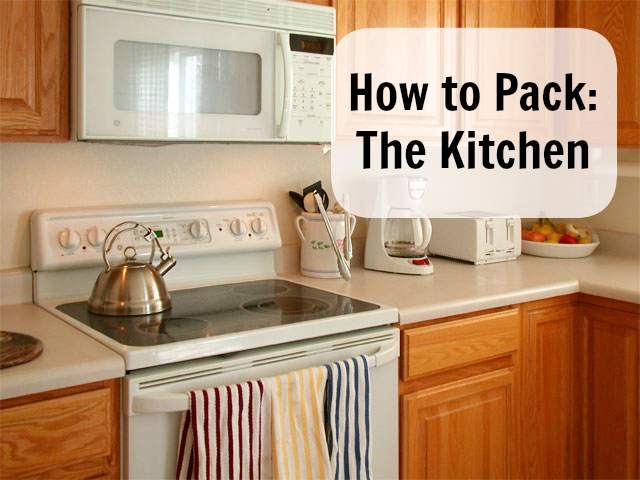
Tips on Packing Your Kitchen Items
Kitchen Packing Tips
Some people get so wrapped up in making sure that their
electronics are handled carefully during a move that they completely neglect
their kitchen items. This is where most of the breakage happens though. Look
through your kitchen; do you have things that could be easily broken? Would you
miss your great grandmother’s gravy boat every Thanksgiving? Would you be upset
if the champagne flutes from your wedding were destroyed?
Set Aside Essentials
When you finally move into your new
home, you may not want to unpack right away or you may find that finding
something as simple as a bowl or a fork to be impossible when faced next to a
mountain of boxes. Of course, we hope for the best by labeling our boxes but it
is wise to set aside some kitchen essentials to get you through the last couple
of days at your new place and the first couple of days in your new place. Some
items to keep on the side include: a couple of forks, spoons and knives
(depending on the size of your family), two to three bowls or plates, two to
three cups, stack of napkins or paper towels, dish soup and a sponge, etc. You
can either set these items in a small-to-medium-sized duffle bag or place them
in a bare cupboard.
Start Packing Less Important Items
Once you have your boxes, it’s time
to get to work. Start by packing items that you don’t use every day such as
decorative vases, cookbooks, extra dishtowels, the majority of your pots and
pans, pictures and small appliances. Pack them in their appropriate box (as
listed above) and not haphazardly or all together – this can lead to damage and
breakage of your belongings on moving day.
Pack Pots and Pots
Pack them in a medium-sized box,
leaving one out in case you need them in the next couple of days before your
move.
Pack Fragile Items
Now, it’s time to pack your china,
dishes and glasses in medium-sized moving boxes or kitchen boxes. In the
kitchen boxes, pack like items together – dishes with dishes, plates with
plates and so on. Make sure you have sufficient packing materials such as
Bubble Wrap®, stretch wrap and packing paper, which is good for filing
in extra spaces. Since these items are the most susceptible to damage, make
sure they are well-protected and tightly packed. You should also make sure that
these boxes aren’t too heavy, where they can break
Pack Your Utensils
When you are packing your utensils,
make sure to keep one or two sets out so that you will have a few pairs for the
first few days as you are unpacking. You can also include spatulas, large
mixing spoons, can openers, etc with your standard forks and knives. Wrap a few
forks together (five to six is a good number) with packing paper and place them
gently in a small-to-medium-sized box.
Packing Different Items
China and Glassware
Although in most cases, 50
pounds is a comfortable weight for boxes to be, you should aim to be well under
this number when you are dealing with china and glassware. You also do not want
too large of a box either, because then you will need to waste a lot of packing
materials to stuff in there to keep contents secure.
In the bottom of the box,
place foam, packing peanuts or even a layer of towels or sweaters. Then, each
piece of china or glass should be wrapped in white paper. A layer of newspaper
can then offer additional protection.
Glass plates and larger
china should be on the bottom, and some type of cushioning needs to go between
each layer. Even if it’s bubble wrap or crushed paper. Smaller plates or
saucers can make up the second layer. Chances are good that now you have some
awkward space, which is perfect for a few pieces of stemware.
When the box is full, add
packing materials to help the contents from bouncing around. Make sure when you
seal the box that you label it as FRAGILE, and also mark which side is up.
Bowls
Bowls just never wrap well
due to their shape, but the good news is that the awkward space leftover in
these boxes can also be used for glasses, coffee mugs, etc. Shallow bowls can
be stood on edge as long as the carton has a nice layer of cushioning in the
bottom. This may allow you to nest more in the box. You can pack some upside
down at the top as well. Similar to the china, wrap each bowl with white paper
and newspaper, and stuff the empty space with some type of packing material to
make sure contents don’t move.
Silver
Although it is possible to
remove tarnish from silver, if you pack it right, you won’t have to deal with
it. Silver tarnishes because of air, so every piece needs to be completely
enclosed in tissue paper. This includes everything from platters to flatware.
When you do wrap the flatware for your move, it does not all have to be wrapped
individually; sets are fine. If the flatware is in a chest, stuff the chest
with bubble wrap, crushed paper or anything else to keep them from sliding
around all over one another. Even a towel or small throw blanket will work.
As you are taping your
boxes do a final check and mark your boxes based on its contents as well as if
an item is fragile. You may also want to indicate the room the boxes go to such
as kitchen, dishes, etc.
It really does not take
that much extra time to pack your kitchen the right way. A lot of things you
likely don’t use daily, so they can be packed far in advance when you are not
in such a hurry. Don’t wait until you are trying to finish everything up the
night before the big day.
Visit our website at www.sunshinemovingcompany.com
Subscribe to:
Posts (Atom)